


While most of the buzz following the record-breaking WNBA All-Star weekend centered on the league’s biggest stars, one of the weekend’s most meaningful stories unfolded just a few miles away.
At the Advocate Center, just a few blocks from the United Center arena, 40 of the world’s top high-school-aged prospects gathered for the fourth Women’s Basketball Without Borders (BWB) All-Star Camp.Over three days, they trained, competed, and learned from current and former players and industry professionals, getting a first look at what it takes to play at the highest level.
For many of them, this wasn’t just another basketball camp. It was a chance to see how close or how far they are from the dream they’ve been chasing.
There was a particular kind of feeling that settled over a gym full of young players who had no idea yet just how good they might become. It’s not exactly nerves or confidence. It’s something closer to possibility. That’s the feeling that filled the room that weekend at Basketball Without Borders, a program that, since 2001, has quietly become one of the most important development programs in the sport. More than 4,900 players from 149 countries and territories have passed through it. 27 campers from last year earned NCAA Division I scholarships. The list of former campers who have gone on to the WNBA continues to grow, including Dominique Malonga, Aaliyah Edwards, Kamilla Cardoso, Ezi Magbegor, and Jade Melbourne, to name a few.
Walking through the gym, it wasn’t hard to imagine another future WNBA star among this year’s group. That’s the strange magic of BWB. You’re never just watching a camp; you’re watching the earliest chapter of their career.

Photo credit: Audrey Yacou
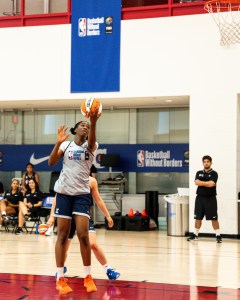
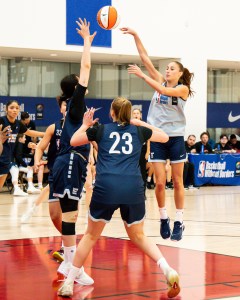
Over the weekend, campers rotated through skill development, athletic testing, 3-on-3 and 5-on-5 competition, but basketball was only part of the curriculum. More than just basketball, players also participated in life skills sessions, a reminder that the BWB program measures its success way beyond just the points totals. WNBA scouts and NCAA coaches watched from the sidelines, a quiet but undeniable signal that for some of the players, this gym is where the opportunity actually begins.
The French Wave
Among the many stories unfolding inside the gym, one stood out in particular: the continued rise of French basketball, a trend that’s no longer a subplot in the WNBA international story, but close to a headline.
Few countries have produced as much young WNBA talent in recent years as France. Between Dominique Malonga, Gabby Williams, Pauline Astier and a growing pipeline of young talent, France has established itself as one of the league’s strongest international contributors. And that success was not lost on the French prospects at BWB. Back at the camp, several French prospects were watching closely, not as distant fans but as players hoping to follow a similar path. Among them, Sarah Cissé.
For Cissé, being selected to the camp was a goal and a tremendous opportunity to walk in the footsteps of players who came before her.
“It was the reward of the hard work I put in during the year, and the experience has been rich on many levels, and the energy gave me more motivation for the future,” said Cissé.
Watching Malonga dunk during the All-Star game wasn’t just entertainment for Cissé; it was motivation.
“The WNBA does not feel as far away anymore. If you work hard and stay focused, you can get there,” said Cissé. “Seeing Dominique, who’s close to us in age, makes it feel possible”.
Cissé also spoke about how valuable it was to compete alongside players from every corner of the world. Every practice brought a different style of play, a new challenge, and another opportunity to learn.
That’s what makes Basketball Without Borders unique.
More than a camp

Yes, the camp is about developing skills. But it’s also about exposing young players to different perspectives, different cultures and different ways of approaching the game. For three days, the gym turned into a classroom led by some of the game’s most experienced voices. Current Washington Mystics guard Georgia Amoore joined two-time WNBA Champion Tamecka Dixon, former Spain national team standout Anna Montañana, Meighan Simmons and Shanece Sims. Leading the camp and returning as camp director for the fourth year was WNBA legend and Boston Celtics Vice President of Team Operations and Organizational Growth Allison Feaster.
For Feaster, BWB represents far more than just a weekend of drills and scrimmages. It’s an investment in the future of the game.
“This camp is the beauty of the game in itself”, Feaster told Winsidr. “The league and the greater game prioritize being borderless. It’s important to invest in the next generation of international players because the game is global.”
Feaster strongly believes that the continued growth of the WNBA depends on creating opportunities for young players around the world long before they reach the professional level.
“We want players from all across the globe to be represented in the WNBA,” she said. “If we’re not focusing on these types of grassroots events, it’s hard for us to grow the game at the elite level.”
Beyond developing future stars, Feaster sees BWB as a reflection of the basketball community as a whole, one where players, coaches and executives from different countries all play a role in growing the sport.
Photo credit: Audrey Yacou
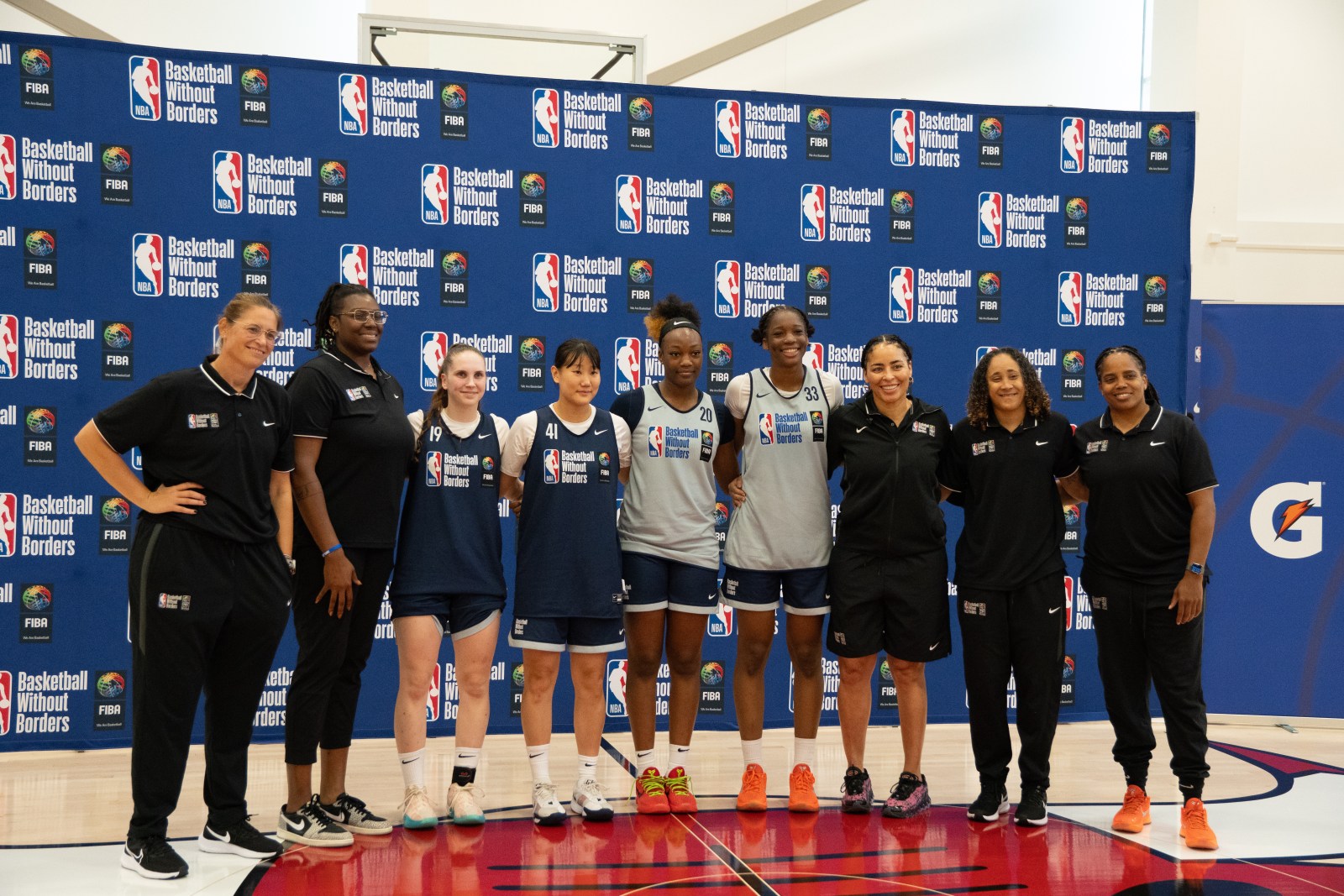 Photo credit: Audrey Yacou
Many players who left Chicago that weekend will continue their journeys in high school, college, or some in the professional league they are already playing in overseas. A few will likely hear their name called on WNBA Draft night next year for some, or years from now for others.
And if history is any indication, one of the campers sharing the floor at BWB may one day return to All-Star Weekend, not as a spectator or camper, but as one of the stars inspiring the next generation.


